From what age can a kitten eat dry food
A kitten can begin to taste dry food at around four weeks of age, while it is still nursing from its mother. At that point it doesn't eat the dry food to fill up, but to get its stomach and teeth used to solid food. Many breeders soften the first portions with a little lukewarm water or pâté, so they are easier to chew for the tiny milk teeth.
Weaning itself happens gradually. At around seven to eight weeks of age, most kittens are weaned from their mother and eat solid food on their own. This is also typically when the kitten moves to its new home, and where you as the new owner take over the feeding. When you bring a kitten home, it's a good idea to continue with exactly the food it knows from the breeder for the first few weeks, and only then slowly switch over to what you want to use yourself. A sudden change of food puts a strain on a little stomach and can cause loose stools.
Kitten food differs from adult food by having a higher content of protein and energy per gram. A kitten triples or more its birth weight during the first weeks and builds up bones, muscles and organs at a pace it will never reach again. That's why dry food composed specifically for kittens isn't just adult food in smaller kibble, but a different nutritional profile. In kitten you'll find the food variants intended for exactly this growth period.
The Little Lion for kittens and pregnant cats
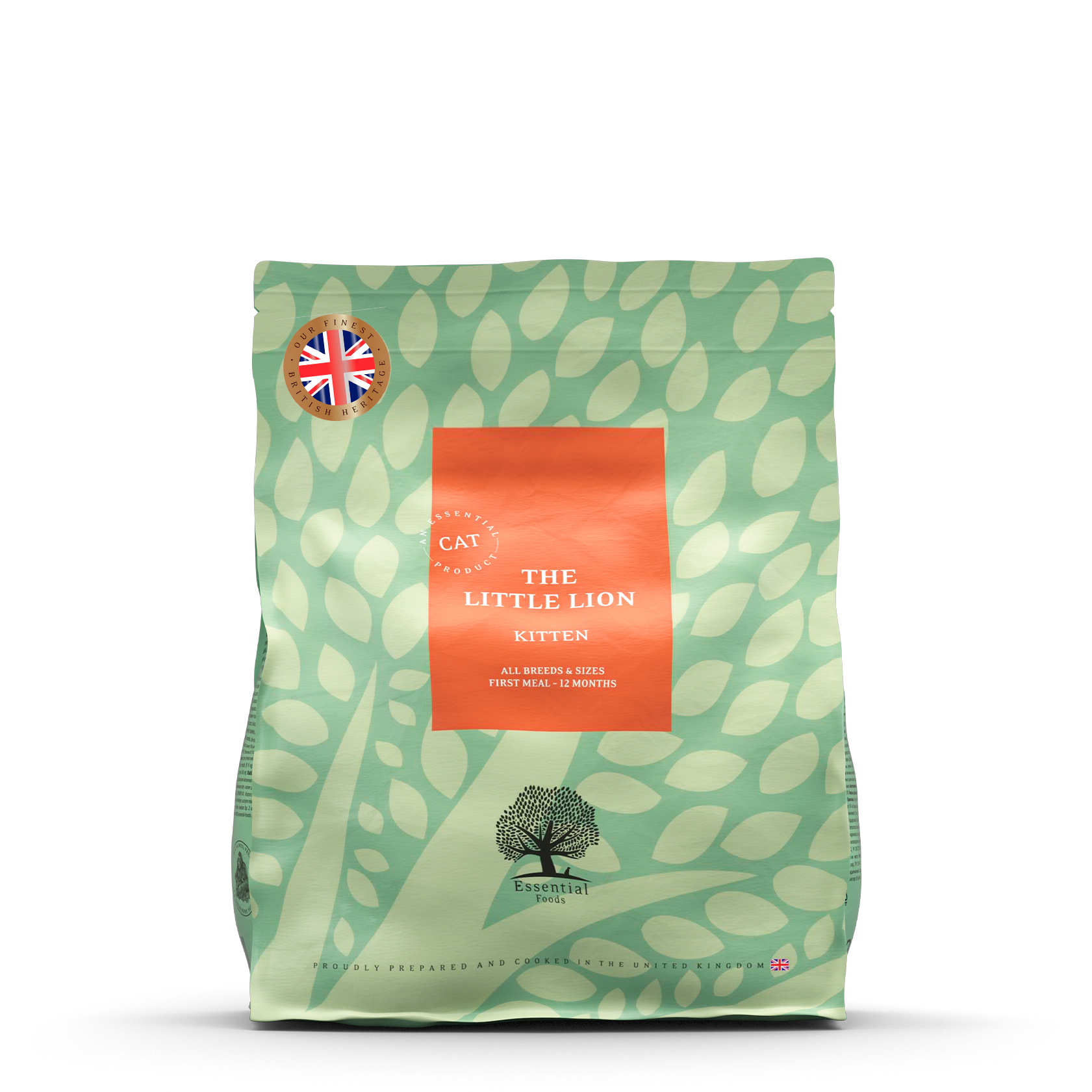
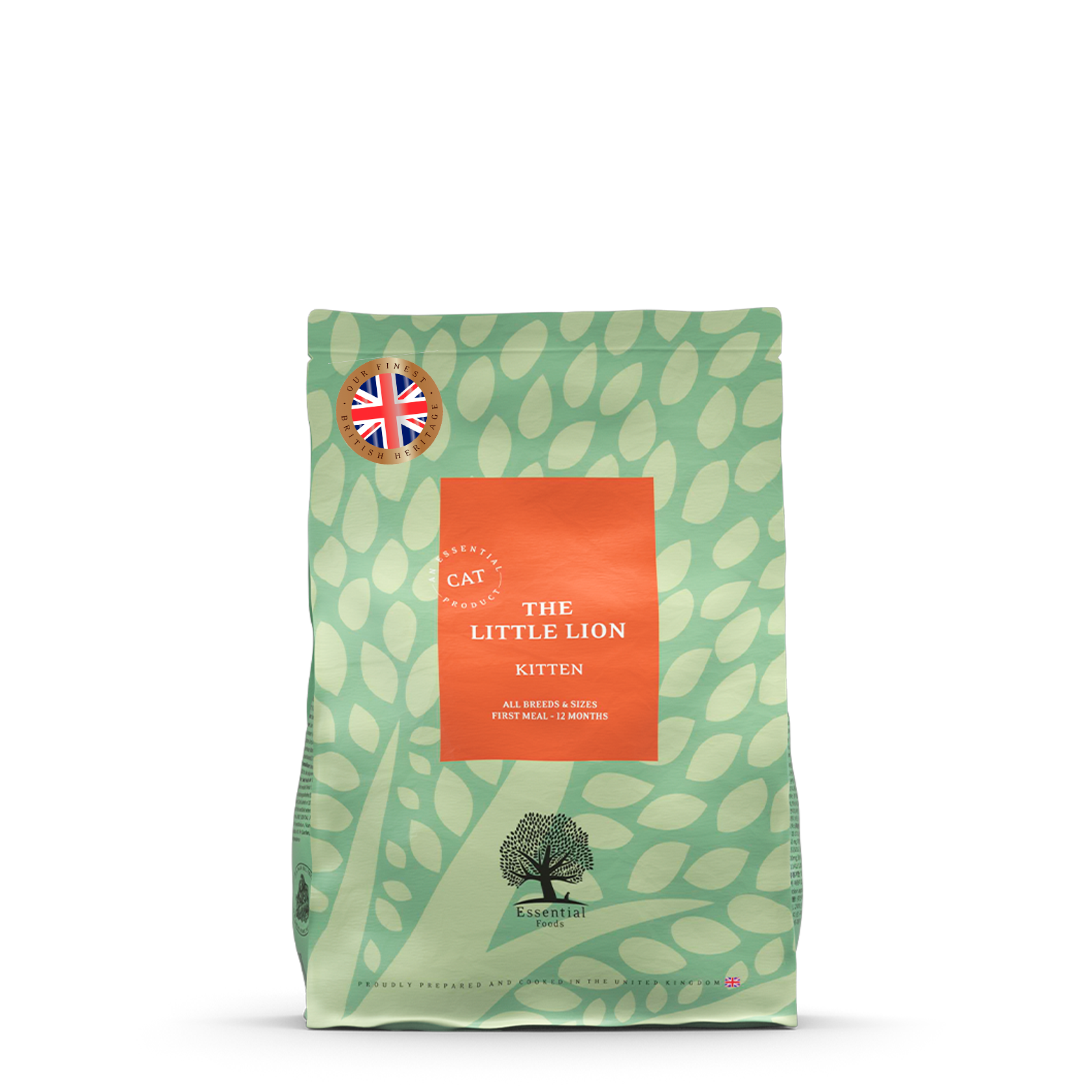
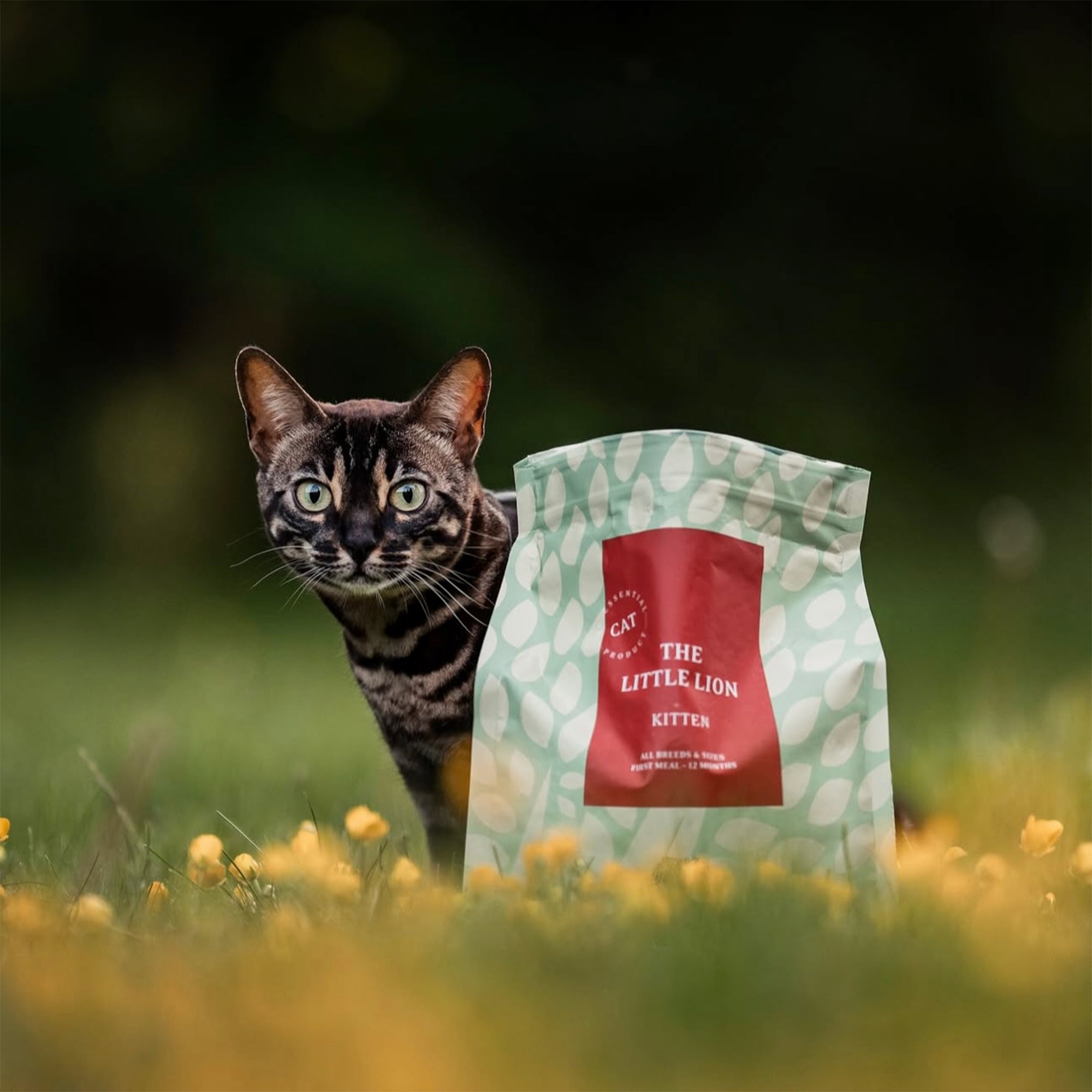
The Little Lion is Essential's dry food for kittens. It is composed for the period when the cat grows fastest, and it also suits pregnant and nursing female cats, who have an elevated energy requirement while building or nursing a litter.
The food comes in two bags, LITTLE LION, 1.5kg and LITTLE LION, 3kg, as well as in a four-pack, if you feed several cats or want to avoid running out. If you're in doubt whether your kitten will take well to it, you can start with a LITTLE LION SAMPLE of 100 grams before you buy a whole bag. The sample meal is also practical when you need to introduce a new food over a few days and want to see how the stomach reacts before committing to a larger amount.
The cat is by nature a predator, and a growing kitten needs plenty of high-quality animal protein to build up muscles and tissue. That is what kitten food should primarily deliver first and foremost. You can read more about what you should look for in the article what should cat food contain
How much should a kitten have per day
How much a kitten should eat depends on its age and weight, and the requirement changes from week to week as it grows. The most reliable guideline is the dosage table on the food bag, which specifies a daily amount based on the kitten's weight. Weigh the kitten regularly during the first months, and adjust the amount upward as it gains weight.
A kitten can't eat very much at a time, because its stomach is small, but at the same time it has a large energy requirement. The solution is to distribute the daily ration over several small meals. Up to around six months, three to four meals a day suits most kittens, after which you can gradually cut down toward two meals daily, which an adult cat typically manages fine with.
Many choose to leave dry food out, so the kitten can eat a little on its own throughout the day. This works for many, because kittens rarely overeat during the growth phase, but keep an eye on body condition and weight along the way. Always make sure there is fresh water beside the dry food, because dry food contains very little liquid, and a kitten needs to drink actively to get enough.
How long should a cat have kitten food
Most cats should have kitten food until they are around twelve months old, when they approach their adult size. Large and slowly maturing breeds can benefit from kitten food a little longer, while a cat that is fully grown early can switch to adult food around one year of age. It's less about a fixed date and more about when the growth is actually coming to an end.
If you want to read more about when a cat can be considered fully grown, the article when is a cat fully grown reviews the difference between breeds and the signs you can watch for.
The switch to adult food itself should happen gradually over about a week. Mix an increasing proportion of the new food into the familiar kitten food, so the stomach and digestion have time to get used to it. If the adult cat is an indoor cat that isn't very active, or one that gains weight easily, an adult food for weight control such as the little lion in Essential's cat range can be a natural next step, depending on the cat's needs.
Dry food and wet food side by side
Dry food and wet food don't exclude each other, and many kittens thrive on a combination. Dry food is easy to store, can be left out, and the kibble gives the kitten something to chew on. Wet food and pâté contribute liquid, which is an advantage because cats are by nature bad at drinking enough, and most kittens find the soft consistency extra appealing.
A practical model is to give dry food as the base food throughout the day and supplement with a couple of meals of wet food. If you mix, remember to count it all toward the daily ration, so the kitten doesn't get too much overall. If you want to give soft meals alongside the dry food, you'll find the cat's wet food gathered in cat food.