Kittens need more protein and energy than adult cats
A kitten doubles its birth weight in about a week and grows rapidly throughout its entire first year of life. That growth requires a food with a higher content of protein and fat than what an adult cat gets. The protein builds muscle and tissue, the fat provides the energy an active kitten burns, and a well-considered food also contains the vitamins, minerals and fatty acids needed to build strong bones, a healthy coat and a robust immune system from the ground up.
That is why ordinary cat food is not enough in the beginning. An adult food is composed for maintenance, not for building up, and does not cover the kitten's extra needs during the growth phase. Kitten food such as the little lion is formulated specifically for this period, when every bite counts a little more than later in life.
How much should a kitten eat per day?
There is no single fixed number that suits all kittens. The amount depends on the kitten's age, weight, breed and activity level, and it changes continuously as the kitten grows. Always use the feeding guide on the specific bag or can as a starting point, and adjust according to how the kitten develops.
A good rule of thumb is to keep an eye on the kitten's body condition rather than relying solely on the gram figure. If you can feel the ribs without being able to see them clearly, and the kitten seems lively and in good health, you are hitting roughly the right mark. If you are in doubt about whether your kitten weighs as it should, the vet is the right one to assess this during the routine visits in the first year.
How often should a kitten be fed?
Kittens have a small stomach and a large energy requirement, and therefore they need to eat more often than adult cats, which manage with fewer meals. The very small kittens need food spread over several meals during the day, and as the kitten gets older and the stomach grows, you can gradually cut down to fewer, but slightly larger, meals.
Many cat owners choose to leave dry food out, so the kitten can take small portions itself throughout the day, while wet food is given in defined meals, because it should not be left out for too long. Whatever the method, fixed routines and clean, fresh water alongside the food are always a good idea.
Wet food or dry food for the kitten
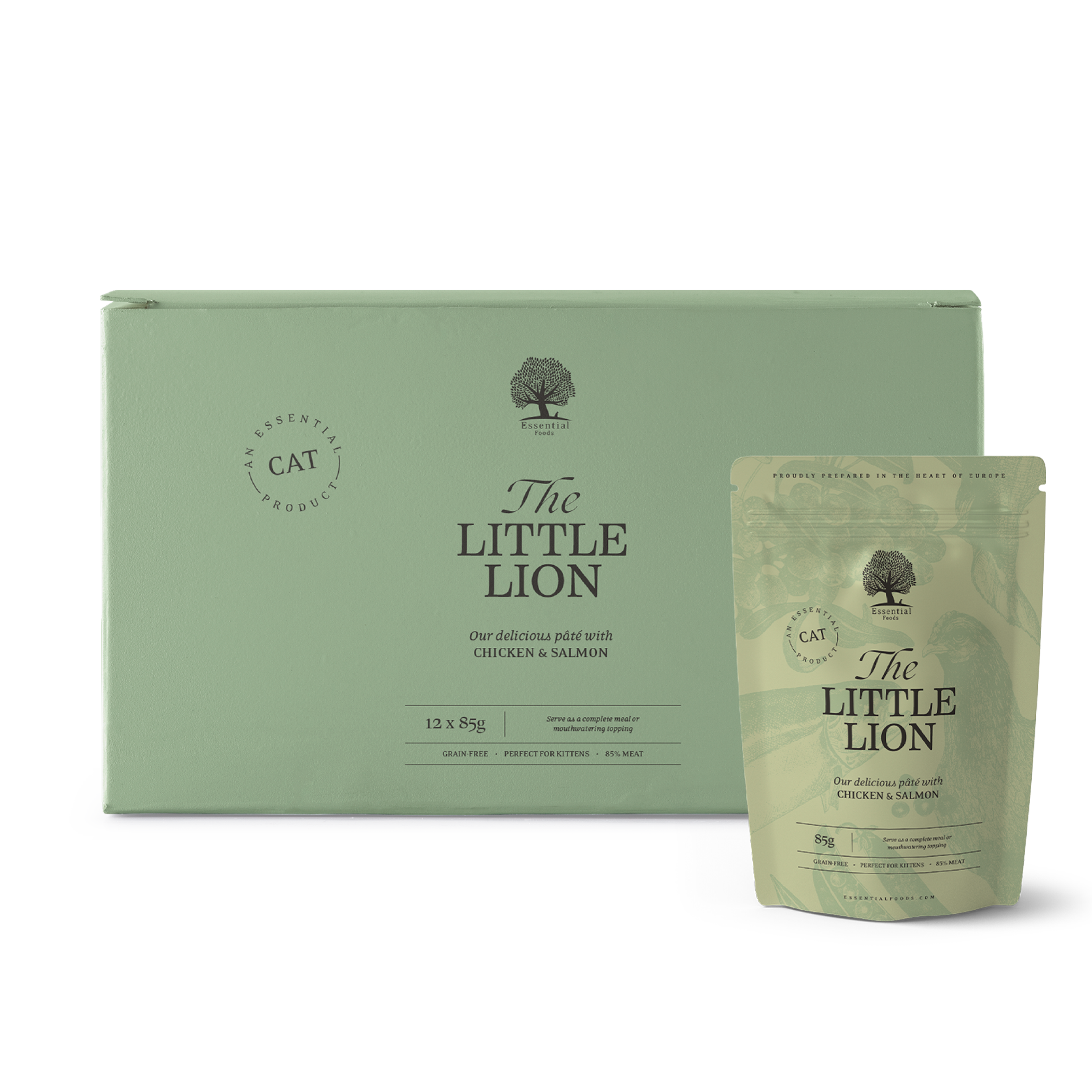
Most kittens benefit from both. Wet food, such as pâté, is soft and easy to eat for a small kitten whose teeth and jaws are still developing, and it also contributes to fluid intake, which is an advantage for cats that do not always drink enough on their own. The Little Lion PÂTÉ is a soft start that is easy to chew.
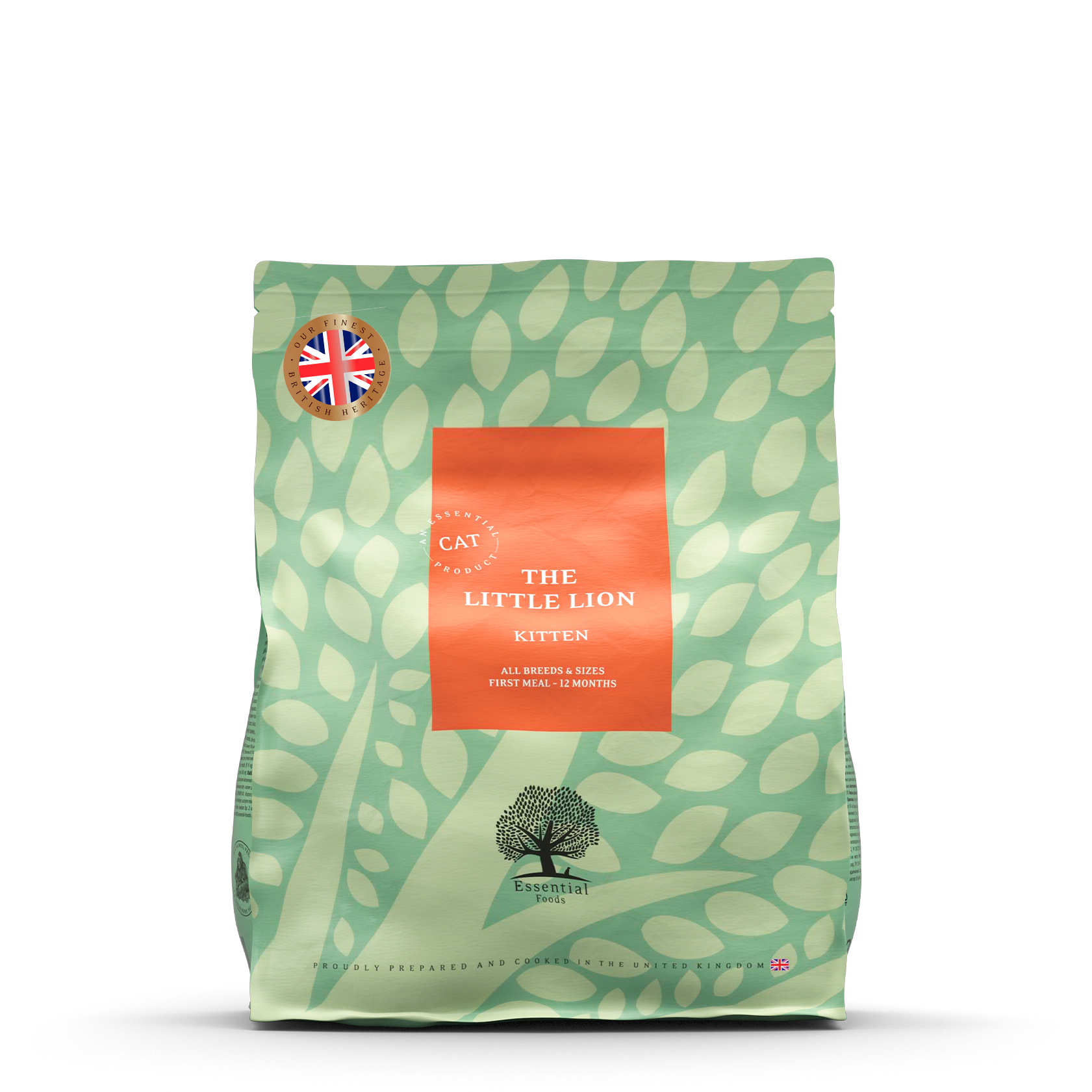
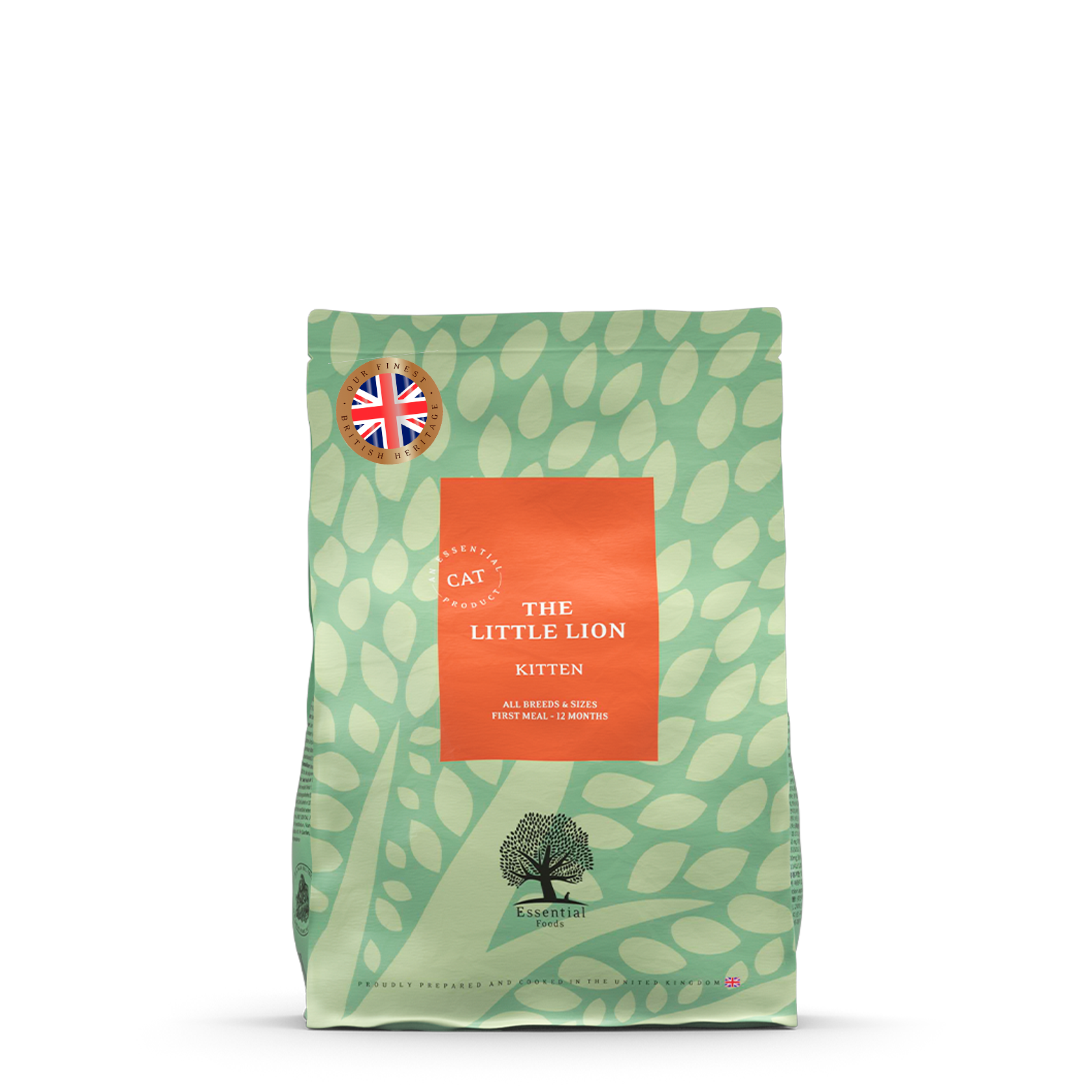
Dry food has the advantage that it can be left out, and that it gives the kitten something to bite into, which is good for the teeth. A combination of the two often gives the best of both worlds: variation in texture and taste, plus the benefits of both fluid and chewing resistance. If you want to try the food before buying a larger bag, there is a LITTLE LION SAMPLE as a trial meal.
When can kittens have dry food?
Kittens begin to be able to handle solid food during the transition from mother's milk, but here the dry food is typically softened with a little water or started with wet food, because the small teeth and jaws are not yet strong enough for dry pieces on their own. As the teeth develop, the kitten can begin to eat dry food as it is.
Give the transition time. Soften the dry food in the beginning, and gradually make it less wet, so the kitten has time to get used to the solid texture itself. If the change happens too quickly, a sensitive stomach can react, and then there is nothing to gain from being in a hurry.
How long should a kitten have kitten food?
A cat is typically considered fully grown around one year of age, and only then, for most breeds, is it done with the most intense growth. Until then, the kitten needs the extra protein and the extra energy that kitten food provides. Large breeds often take a little longer to become fully grown than smaller cats, so the age is a guideline, not a fixed date.
If you want to read more about when your cat can actually be considered an adult, we have gathered it in the article when is a cat fully grown. When the time comes to switch, you make the transition to adult food gradually over a few days by slowly mixing the new food into the old.
How to give your kitten the best start
The first year lays the foundation for the cat's health for the rest of its life, and the food is a central part of that foundation. Choose a food that is made for kittens and not just an adult food in a smaller bag, keep an eye on the kitten's body condition and well-being along the way, and make changes to the food calmly rather than suddenly.
Beyond the daily food, you can read more about what a good cat food should contain in the article what should cat food contain. It gives a useful overview of how to assess the contents of a food bag, no matter what age your cat is.