How to choose a chew your puppy can handle
A chew for a puppy needs to be softer than one for an adult dog. A puppy's milk teeth are thin and sit loosely during teething, and a hard chew can crack a tooth or make the gums sore. Go for something that gives way when you press a nail into it, rather than the rock-hard types like raw bones, deer antlers or hard nylon chews. The size should suit the puppy's mouth: it should be able to chew on it, but not swallow it whole, and not bite off large pieces that can get stuck in the throat.
Beyond hardness, the content matters. A chew ends up in the stomach, and a puppy's stomach is sensitive. Choose something with recognisable, animal-based ingredients and without artificial colourings, flavourings and preservatives, so that on top of the itchy teeth you don't give the stomach something to struggle with. Our treats are made from whole meat ingredients without artificial additives, and several of them are well suited to exactly that phase.
When can a puppy have chews?
Most puppies can start on something to chew on as soon as teething begins, typically around three to four months, when you can tell the teeth are itching. This is when the need to chew is greatest, and a suitable chew can divert the urge away from furniture, shoes and hands.
What matters is not a specific date, but what you give. A very small puppy of eight to ten weeks still only has milk teeth and should have something soft it can work with, not a hard chew intended for an adult dog. When you introduce a new chew, keep an eye on it the first few times: make sure the puppy chews and doesn't just tear off large chunks and swallow them, and take it away if it's being swallowed too greedily.
How often can a puppy have chews?
A chew is a treat, not a meal, and it counts towards the day's total amount. The rule of thumb for treats is that they should make up no more than about ten percent of the puppy's daily energy, so the rest comes from the complete meal that builds bones and muscle. In practice this usually means a smaller chew once a day or every other day, and that you cut back correspondingly on the rest of the treats.
Keep an eye on the stomach and the stools too. A new chew on a puppy stomach can cause loose stools if too much comes too quickly. Introduce one new type at a time and in small amounts, so you can see what the puppy tolerates. If you want to dive deeper into the amounts, we've gathered it in how many treats can a dog have and specifically for puppies in when can puppies have treats.
Chew or dried treat during teething
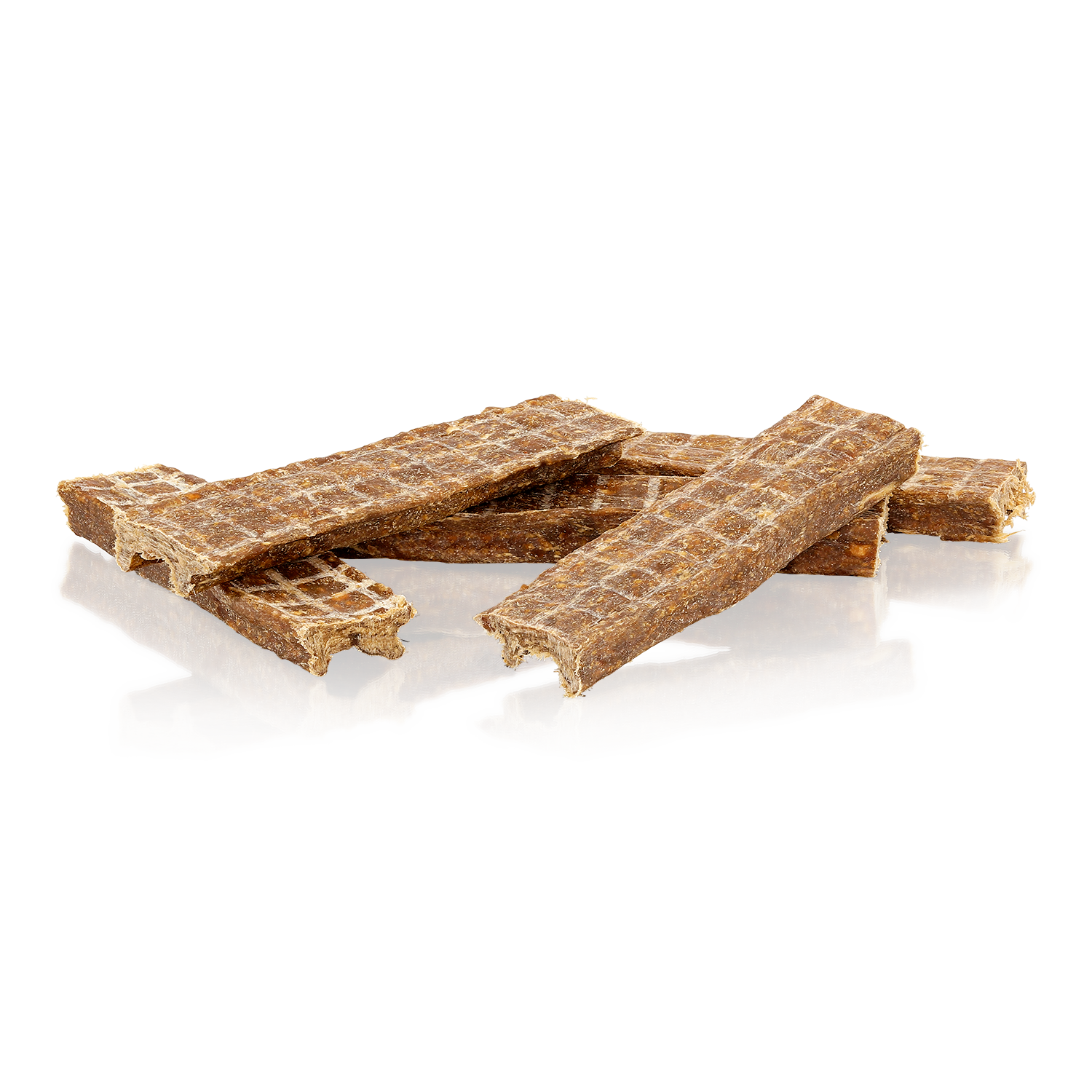
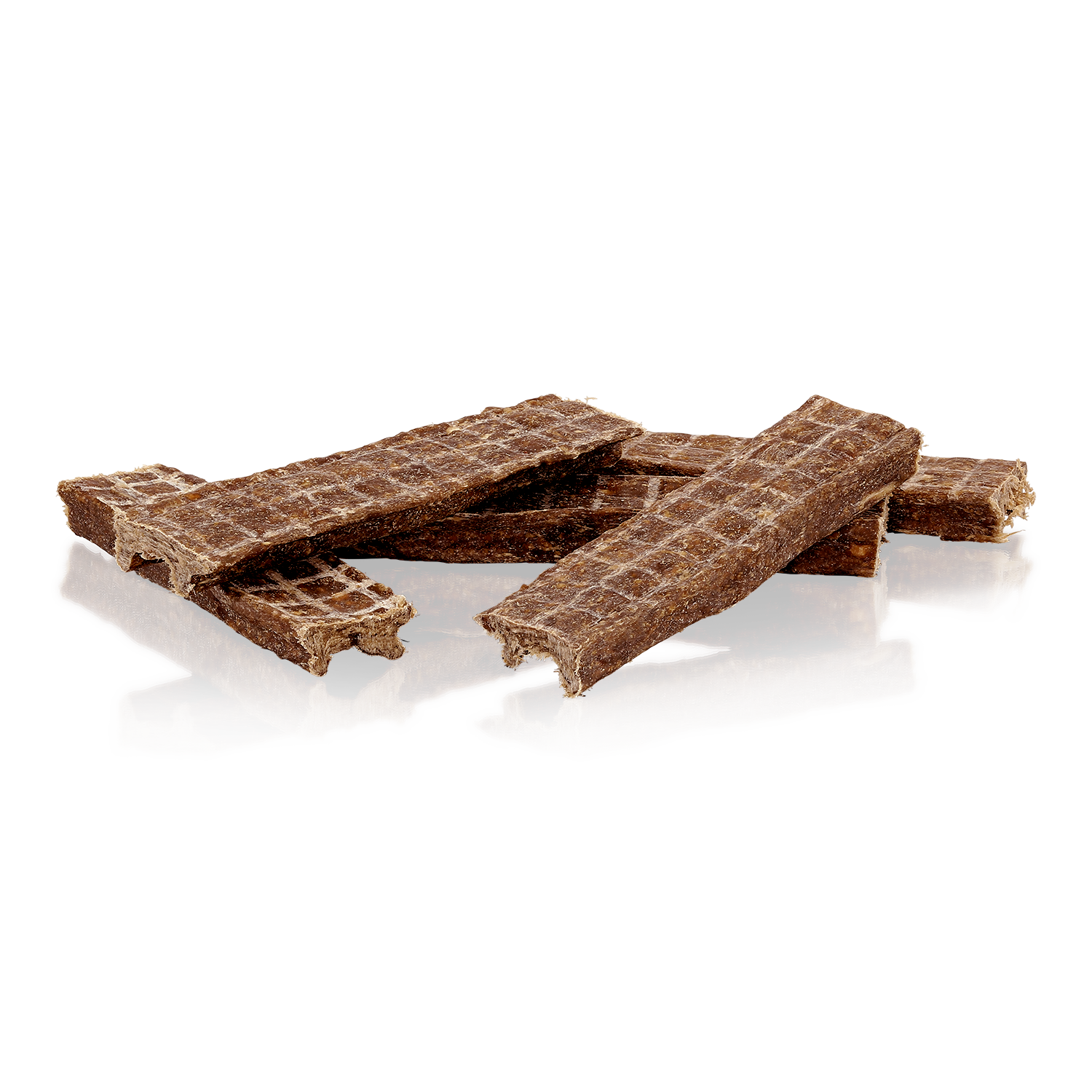
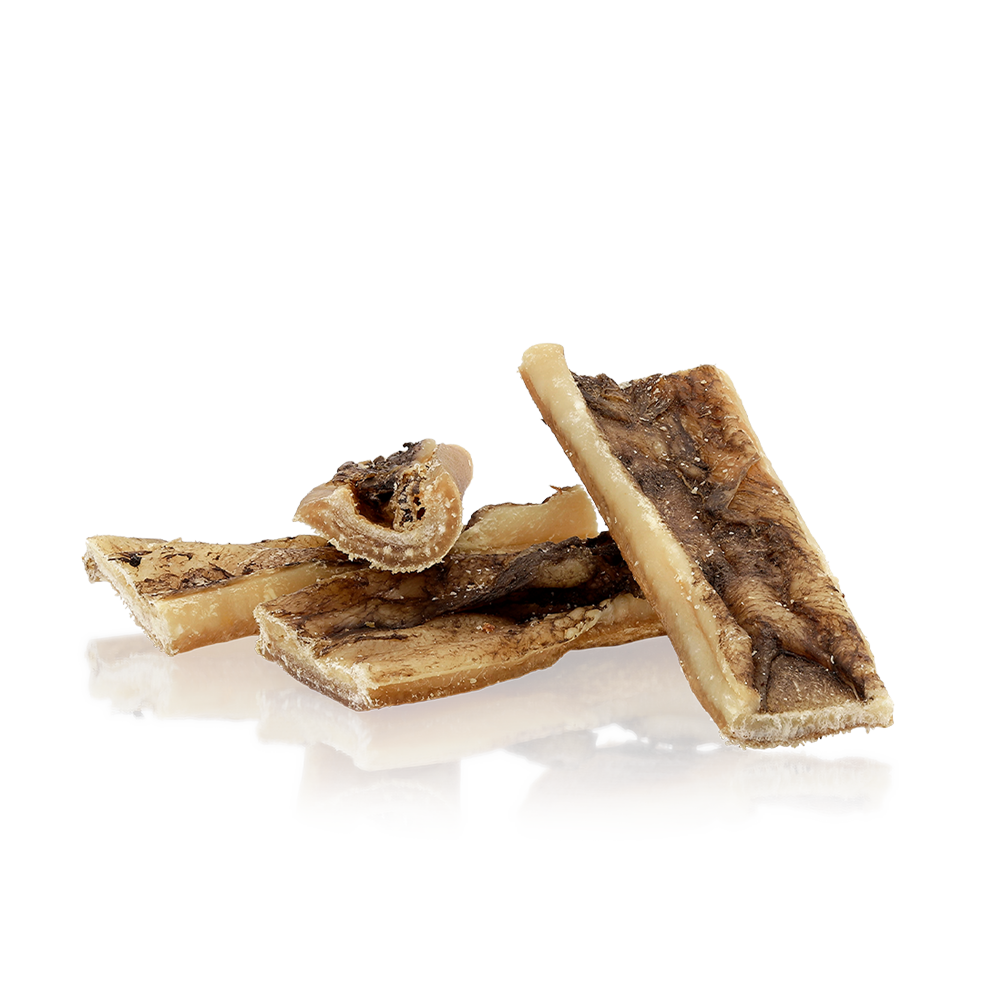
"Chews" covers several things, and for a puppy the difference is worth knowing. The classic, hard types like raw marrow bones, deer antlers and pressed tendon chews are intended for powerful adult jaws and are too hard for milk teeth. For a puppy it often makes more sense to choose a dried treat or a smaller, more yielding chewing piece that the puppy can work with for a long time without risking a cracked tooth.
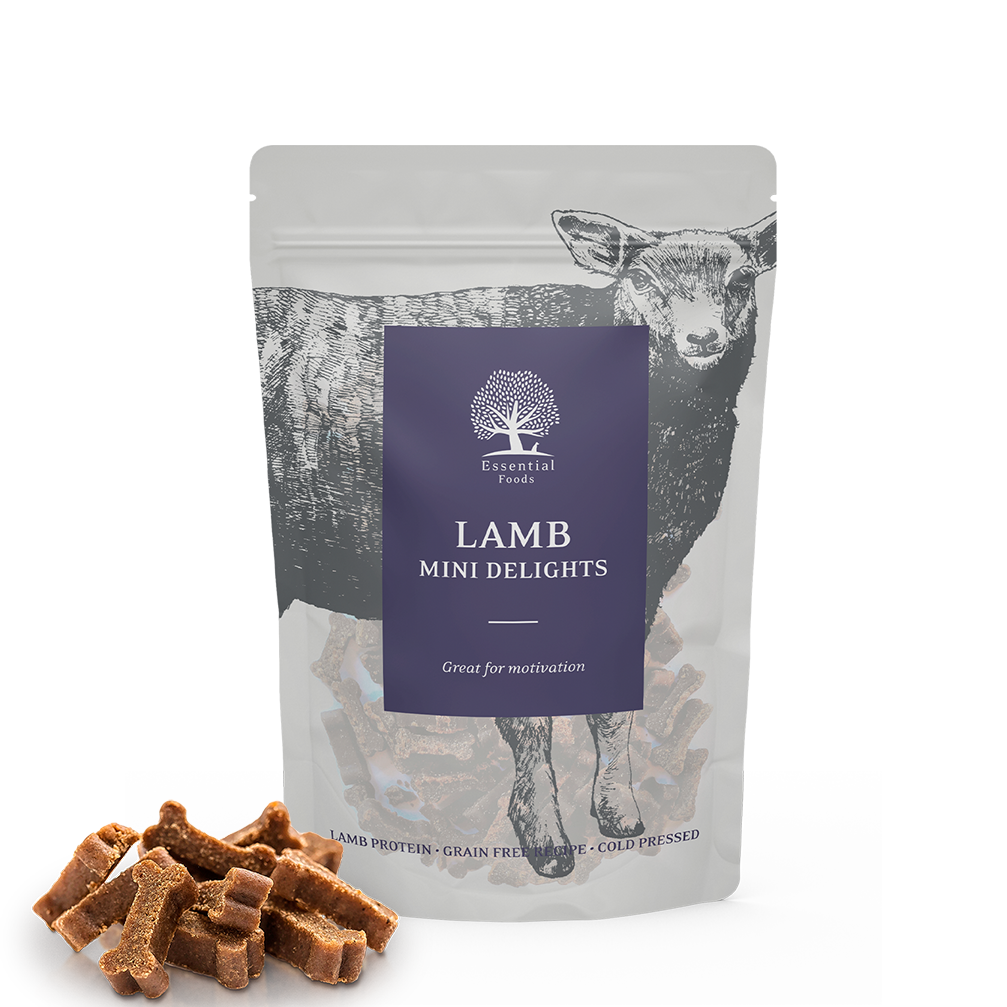
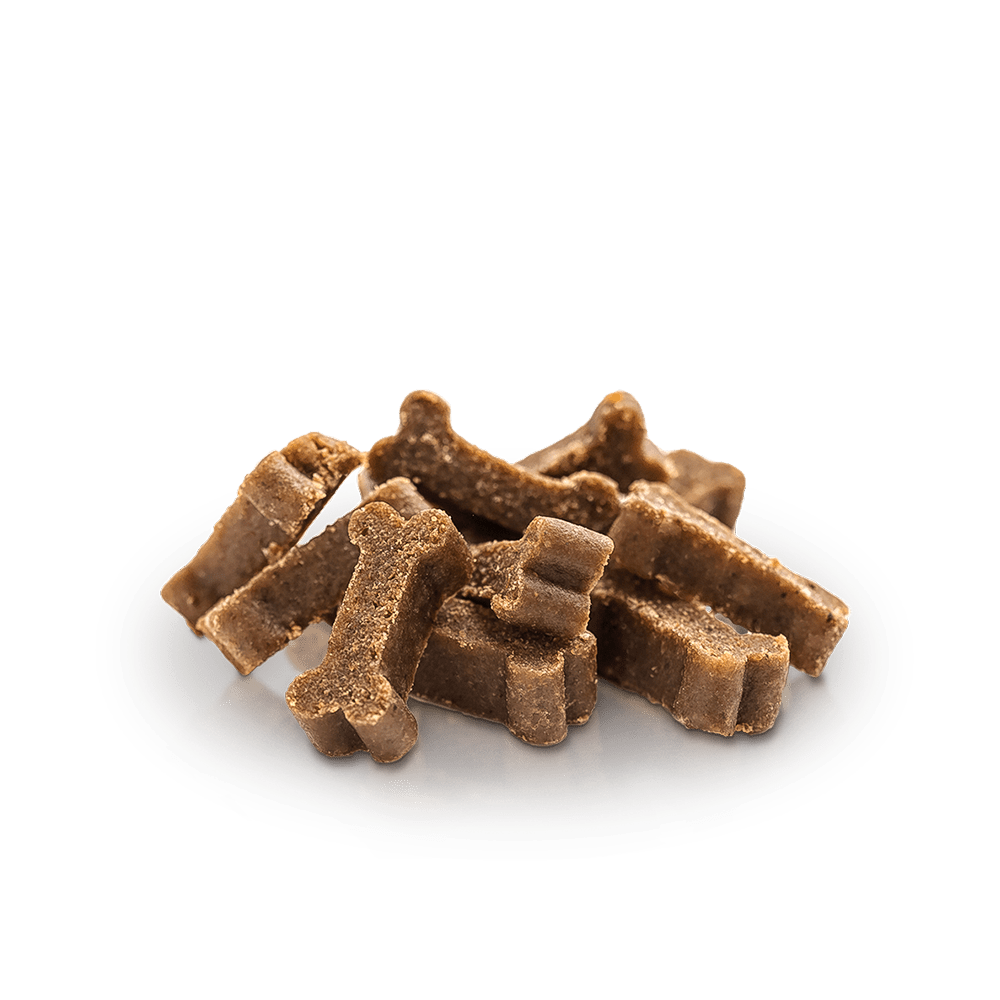
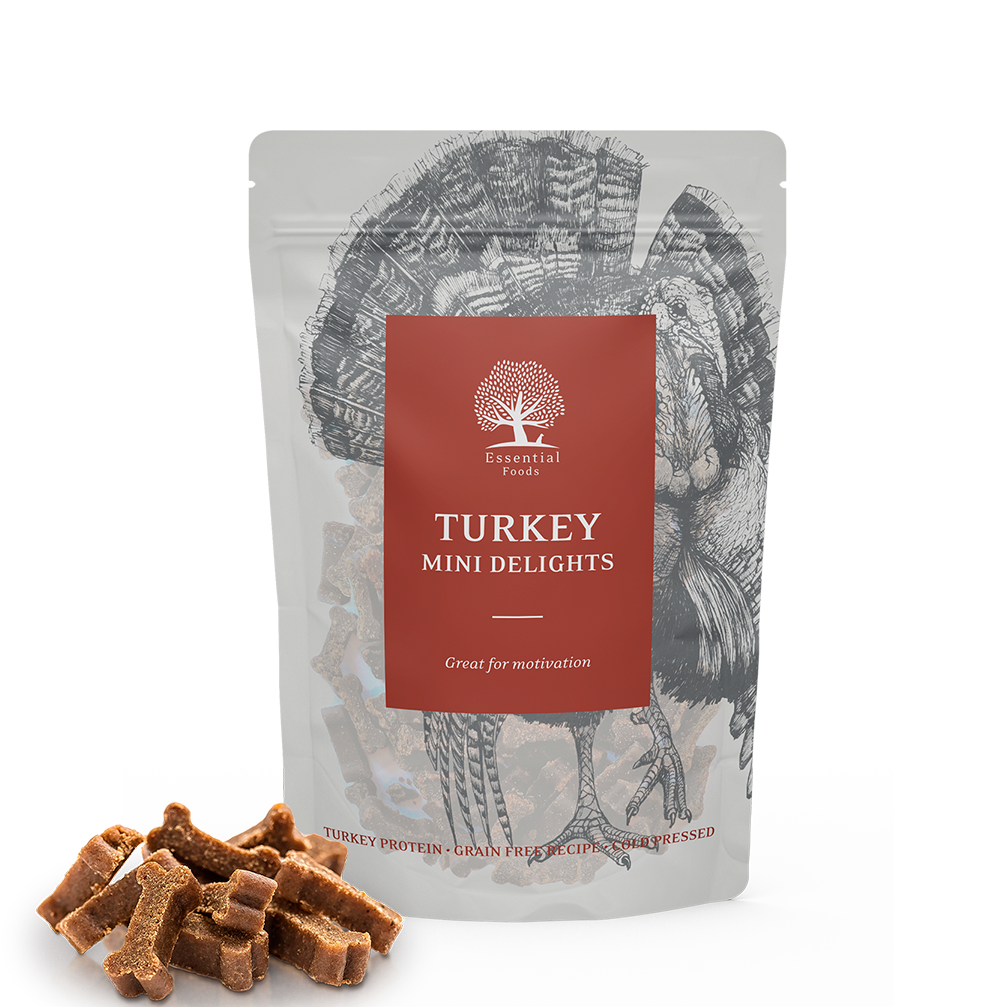
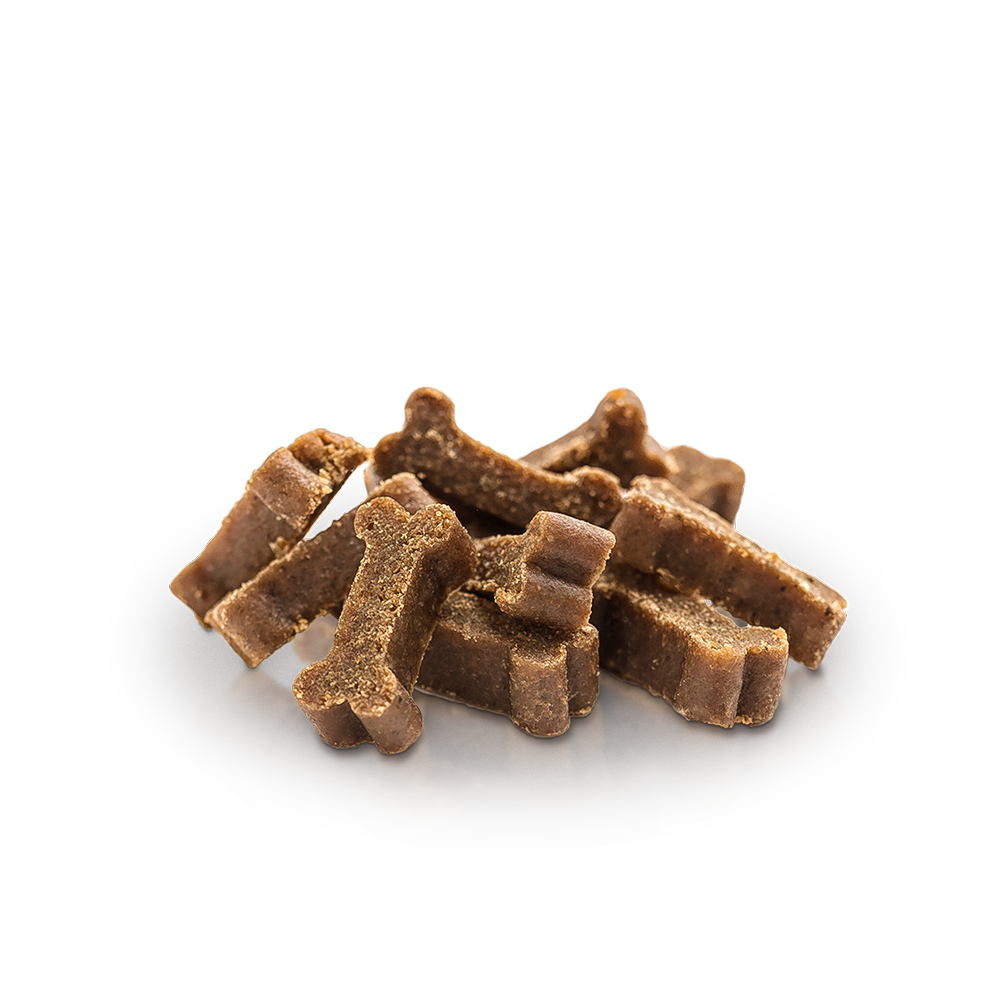
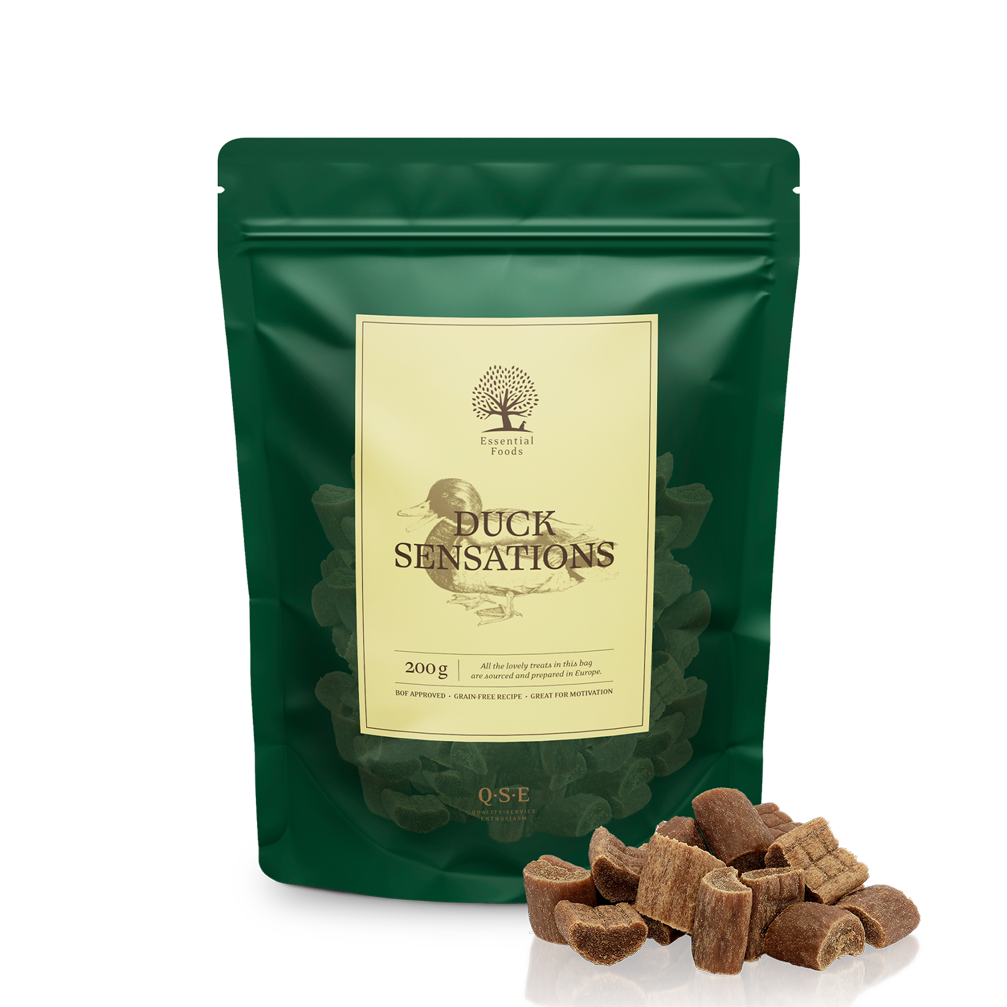
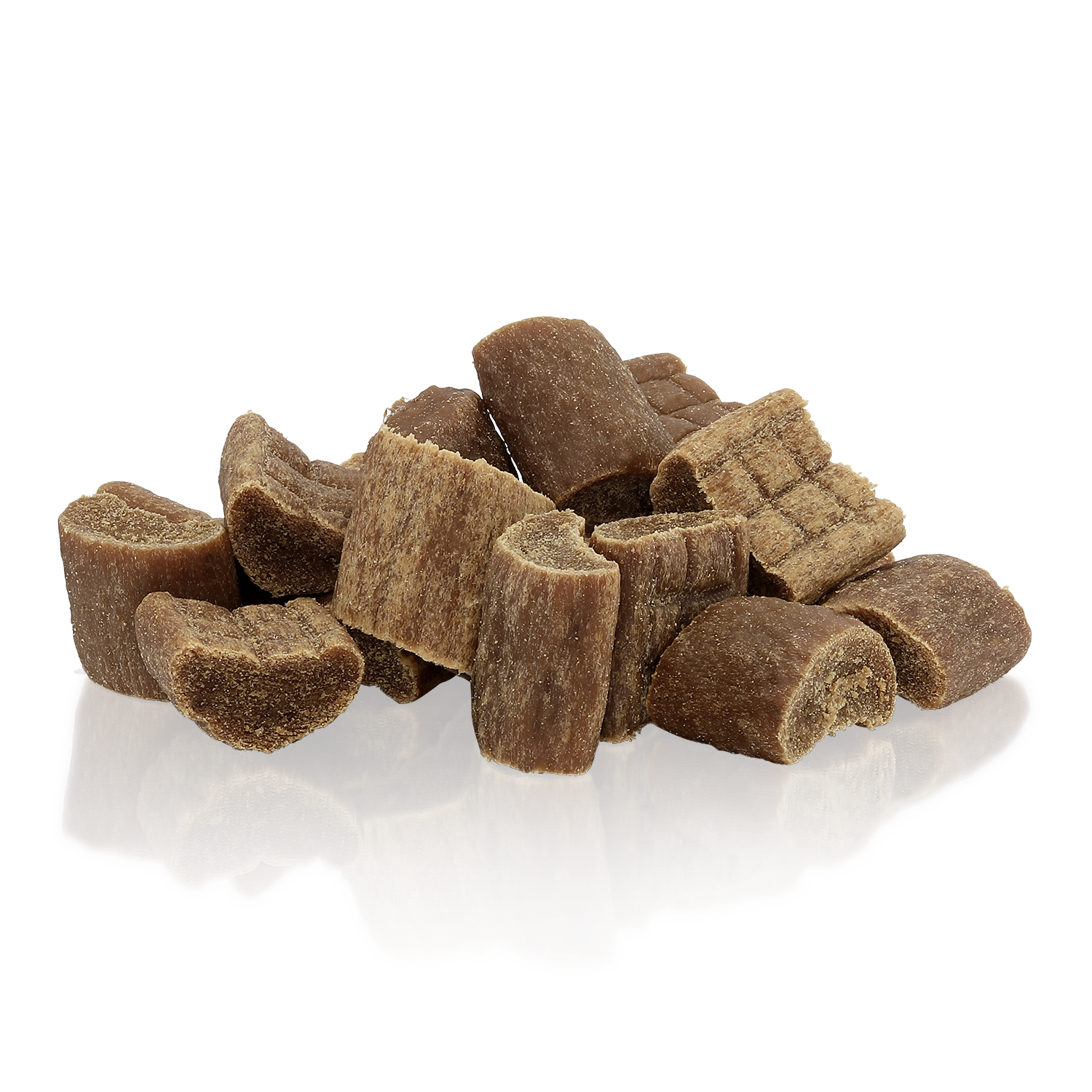
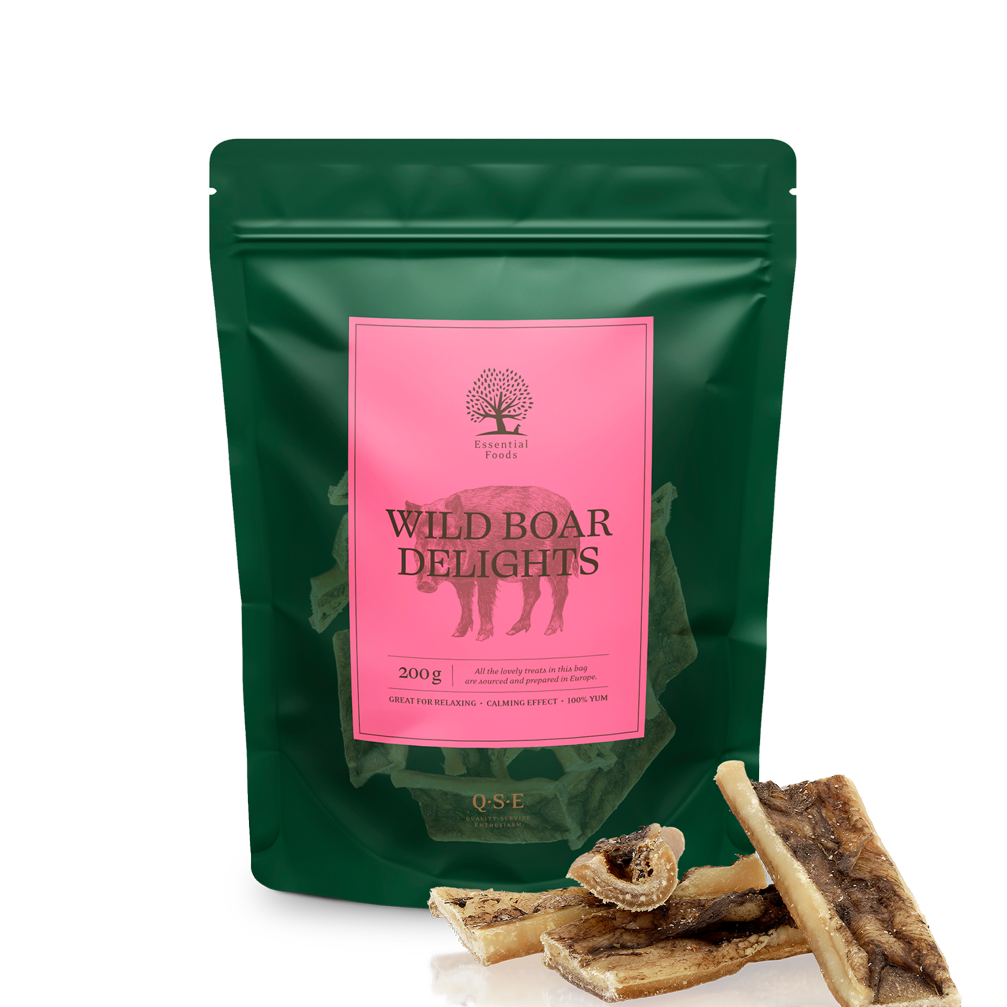
In this collection you'll find treats suited to the purpose. GRAIN-FREE BEEF & GAME DENTAL DELIGHTS and GRAIN-FREE BEEF & RABBIT DENTAL DELIGHTS are made to be chewed and combine chewing time with a grain-free content. If you want something smaller to train and reward with along the way, TURKEY MINI DELIGHTS and LAMB MINI DELIGHTS come in a format that's easy to portion. WILD BOAR DELIGHTS and DUCK SENSATIONS add variety in flavour on simple, animal-based ingredients.
Why chewing helps against biting behaviour
A puppy that bites everything rarely does so to be a nuisance. During teething the teeth hurt, and chewing relieves the pressure in the gums. The rest of the time, chewing is a way of using the head: it's one of the activities that satisfies the brain and settles the puppy down afterwards.
That's why a chew works best as something you offer on your terms. Give it when you want the puppy to settle down, for example in the evening or when you need some peace to get something done, rather than in the heat of the moment in the middle of a biting game. That way the puppy learns that it's the chew and not the table leg that satisfies the urge. If you want more ways to keep the puppy occupied than chewing, we've gathered ideas in 5 brilliant enrichment ideas.
Chewing and the puppy's dental health
When the puppy chews, the chewing piece scrubs across the teeth, and that helps keep plaque down. The effect is modest compared to brushing the teeth, and the important dental care really begins once the permanent teeth have come in. But the habit of chewing is good to establish early, and it also makes the puppy comfortable having something in its mouth, which helps later when you need to introduce tooth brushing.
If you want to read more about when the milk teeth are replaced, and how to care for the teeth going forward, you can start with when do dogs change teeth and how do you brush a dog's teeth
Never give chews without supervision
No matter how suitable a chew is, a puppy should not have it alone. A puppy can bite off a piece that's too big to swallow, or gnaw the chew down so far that the last remnant can be swallowed whole. Stay nearby, and take the rest away when the piece becomes small enough to pose a risk. At the same time, make sure there's always fresh water next to it, because chewing makes them thirsty.
If you have several dogs, let the puppy chew on its own. Chews are something dogs can be possessive about, and a puppy should be able to chew in peace without having to defend its chew. If you want to be better prepared for the whole puppy period, the ultimate puppy guide gathers most of what you're dealing with in the first months.